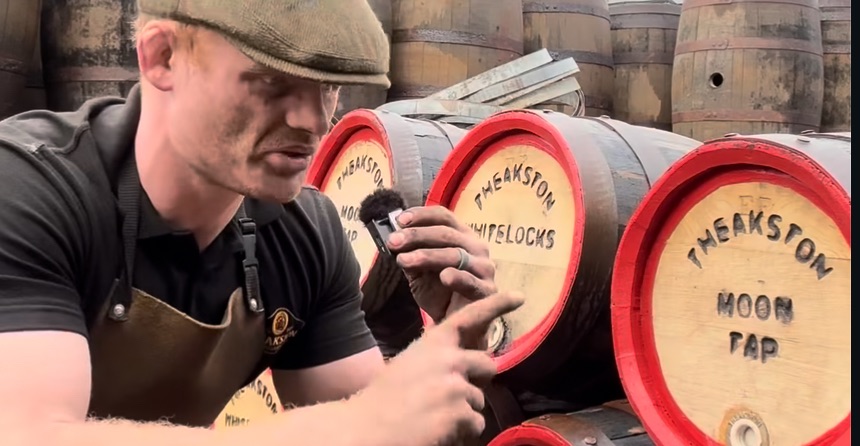
Every craftsman has someone whose work makes them stop, watch, and think, I want to understand how they do that.
For me, one of those people is Journeyman Cooper Euan Findlay.
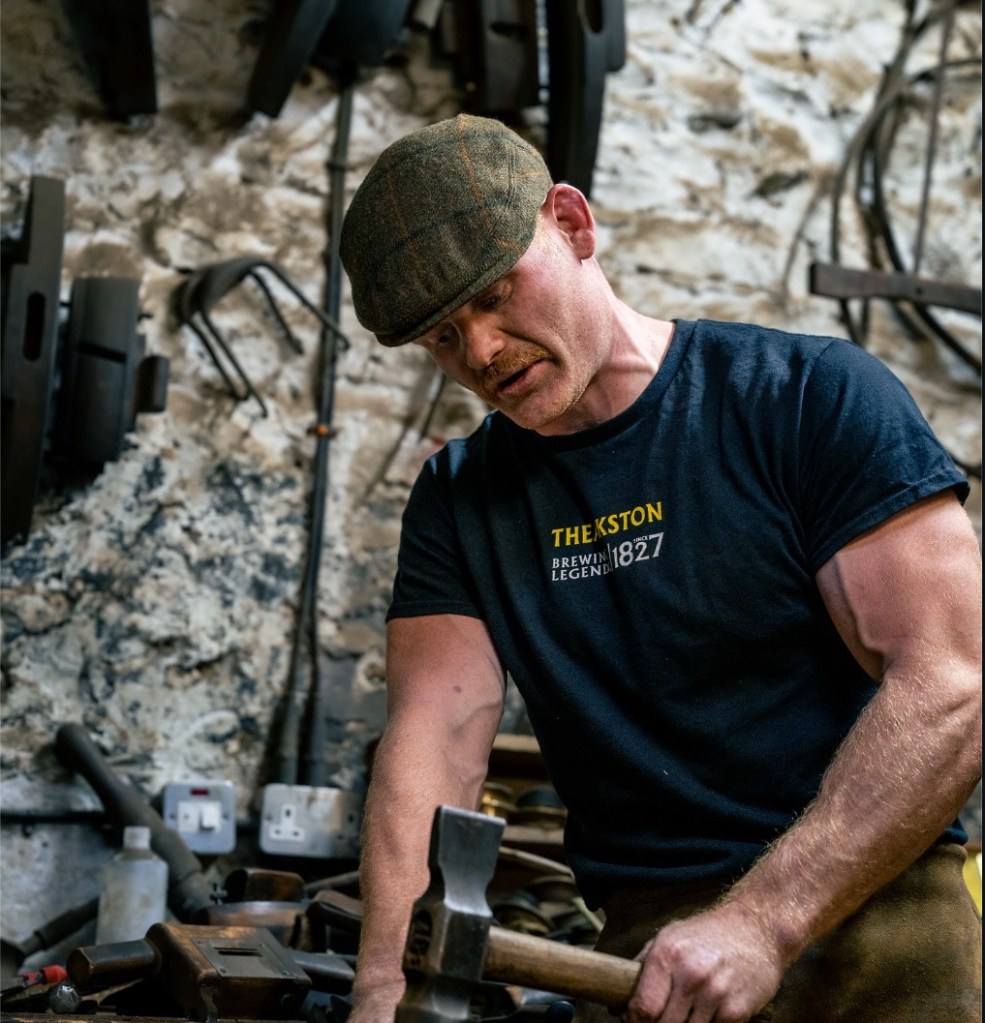
In my opinion, Euan has become one of the strongest voices on social media for keeping the name and craft of coopering alive. Based at Theakston Brewery in Masham, North Yorkshire, England, Euan operates Findlay’s Cooperage within the historic brewery, where he continues the traditional work of making and repairing casks.
I first came across Euan while I was deep in the research stage of my own journey. I was reading every book I could find, searching the internet for photographs and archaeological evidence, and trying to piece together how coopers worked from the Roman period through the Viking, Medieval and Renaissance periods.
Then I found Euan’s Instagram page.
There he was—not simply talking about coopering, but actually doing it. The tools, the casks, the techniques, and the rhythm of the work were all there to see. I ended up watching every video he had posted at the time. Some of them more than once.
You can see the pride he takes in the craft. More importantly, you can see his willingness to share what he has learned. That generosity of knowledge is important in a craft like coopering, where so much of the skill was traditionally passed from master to apprentice through observation and repetition.
My own practical journey has been considerably less traditional.
I have been using a combination of modern shop equipment and older hand tools, trying to understand the fundamentals by making buckets myself. The table saw and other modern tools have helped me work out the mathematics and geometry—how the stave angles come together, how many staves I need, and how those angles affect the finished diameter.
Then comes the harder part: taking that knowledge and trying to reproduce the same results with historical tools.
That process has involved plenty of mistakes, adjustments and experimentation. Along the way, I have also had the opportunity to share what I have learned with others at SCA events, teaching basic stave construction and discussing how coopering changed from the Roman world through the Viking, Medieval and Renaissance periods.
After about a year of working through all of this, I finally reached out to Euan.
By that point, I felt that I had learned enough to at least speak a little of the cooper’s language. More importantly, I had reached one of those problems that every apprentice eventually encounters: I know what I am trying to accomplish, but I cannot quite figure out how to get there.
So I sent Euan a message through Instagram and hoped for a response.
To my surprise, he replied.
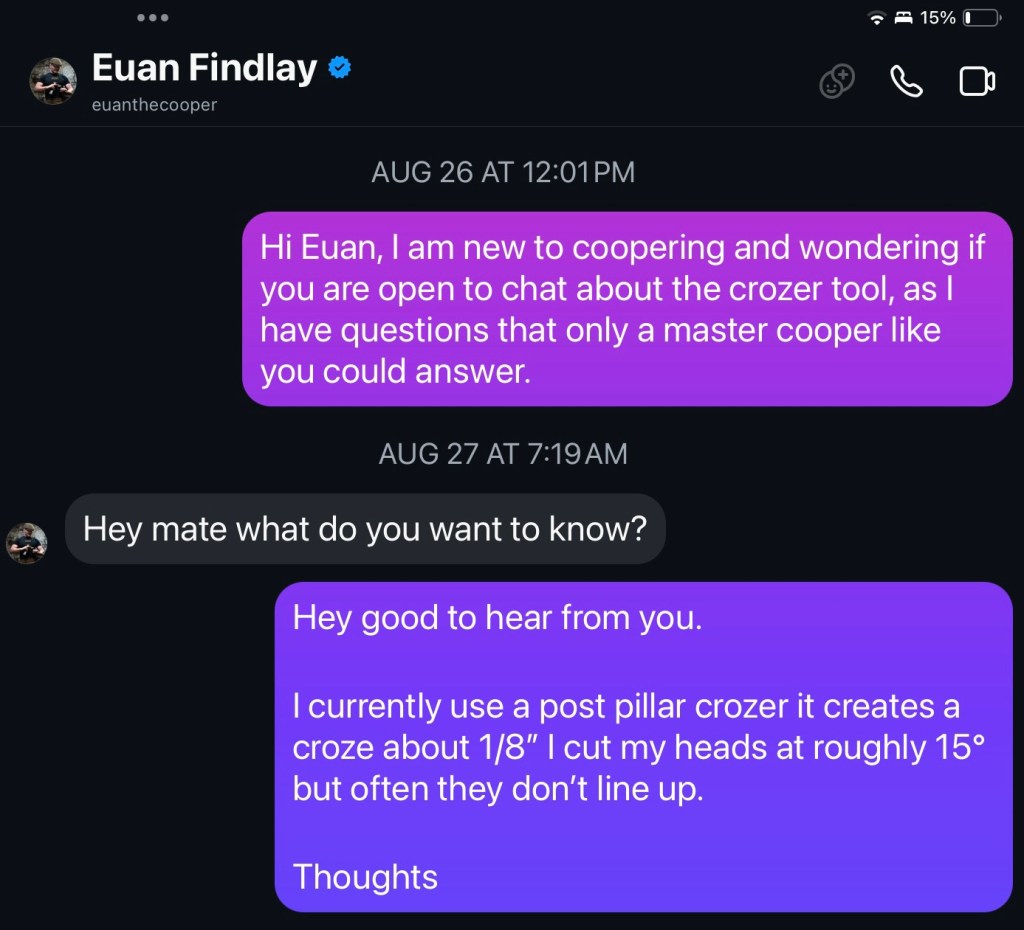
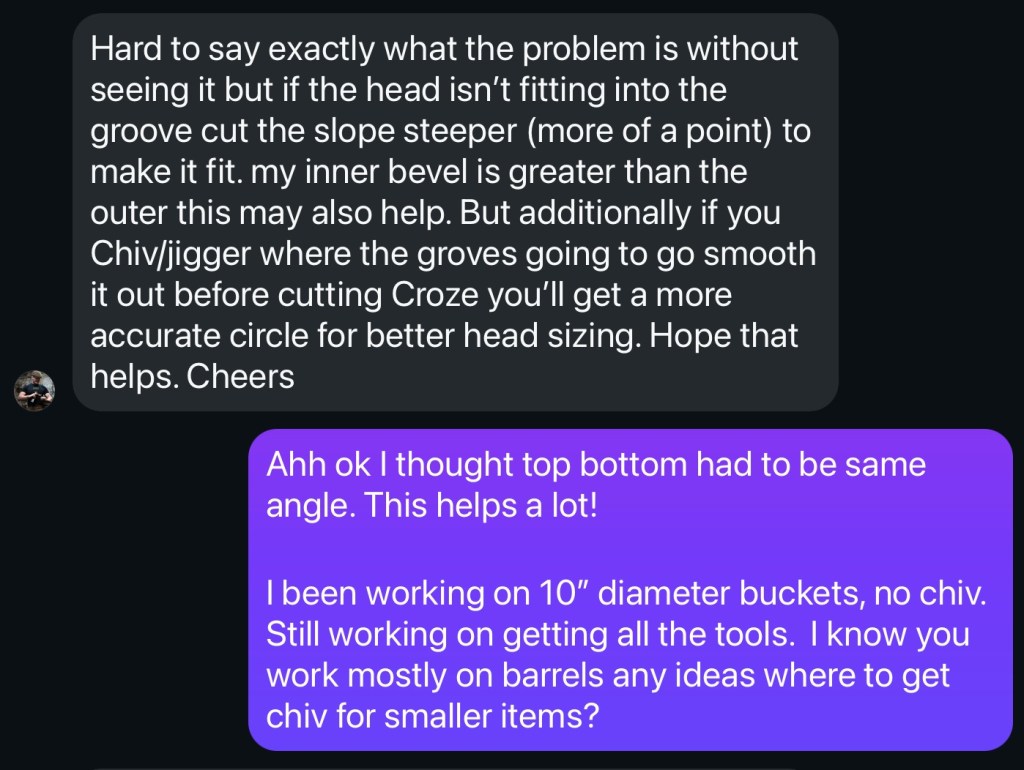
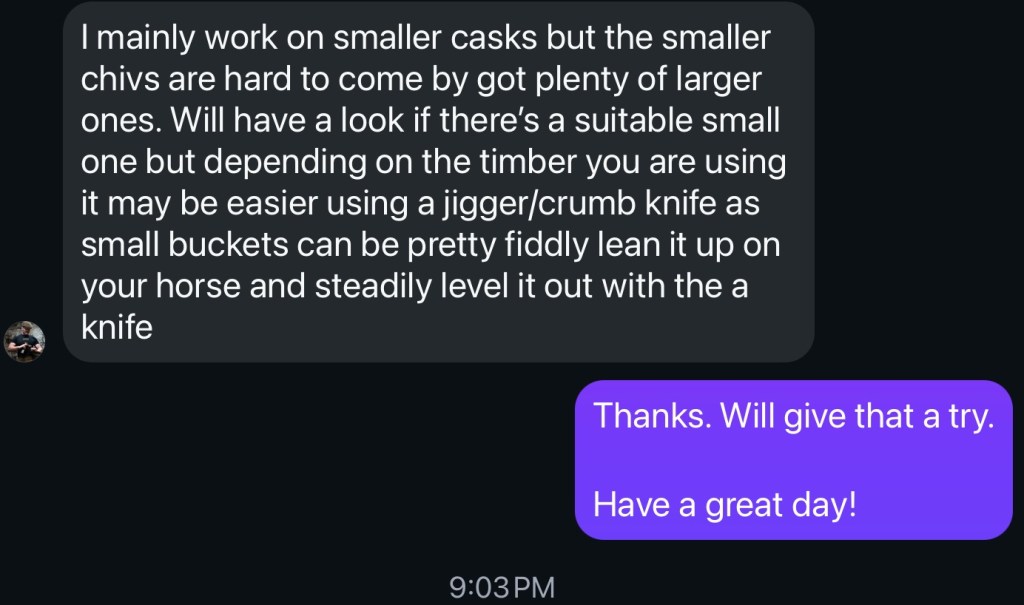
That conversation helped me identify the missing piece in my process—the chiv.
The chiv was the tool I had been missing to properly shape the inside of the staves and, ultimately, get the cask or bucket head to fit correctly into the croze.
Of course, there is a small problem.
Finding a functional traditional chiv is difficult enough. Finding one large enough to work with the size of buckets I am making?
I might have better luck finding a unicorn.
And that is where the next part of this journey begins.
The research continues, the tools continue to evolve, and every successful cut—and every mistake—teaches me something new.
I may not have a traditional cooper’s shop in North Yorkshire, but through people willing to share their knowledge, archaeological research, old tools, modern experiments, and a lot of stubbornness, I am slowly learning to speak the language of the cooper.
The journey continues, one stave at a time.

