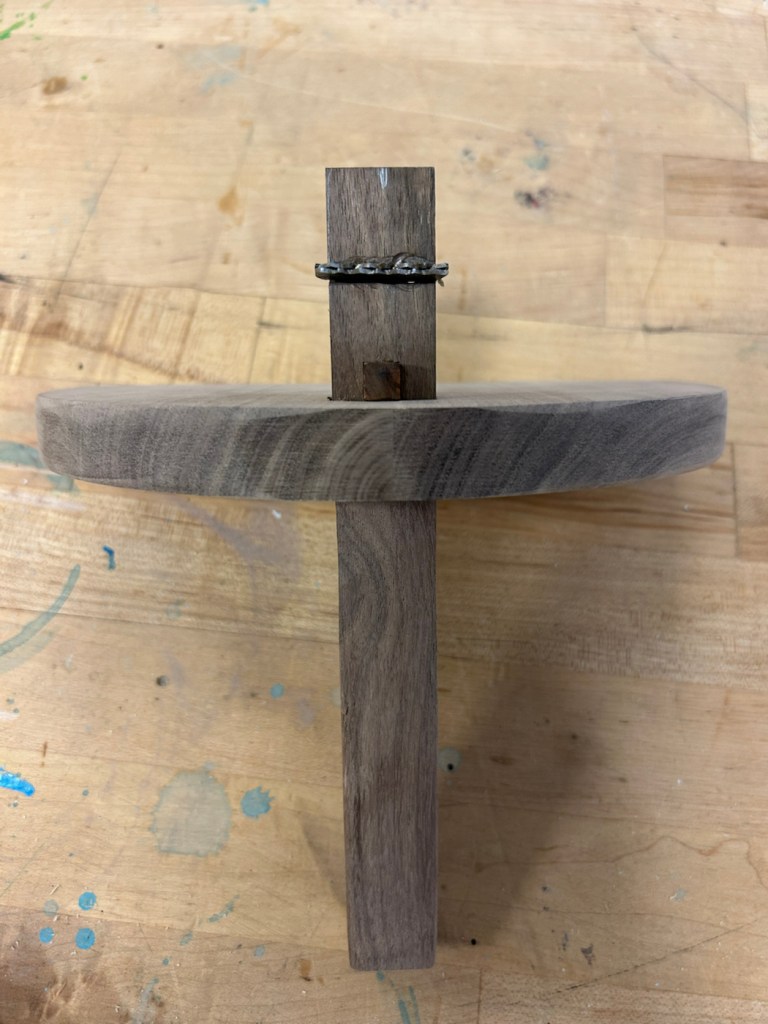
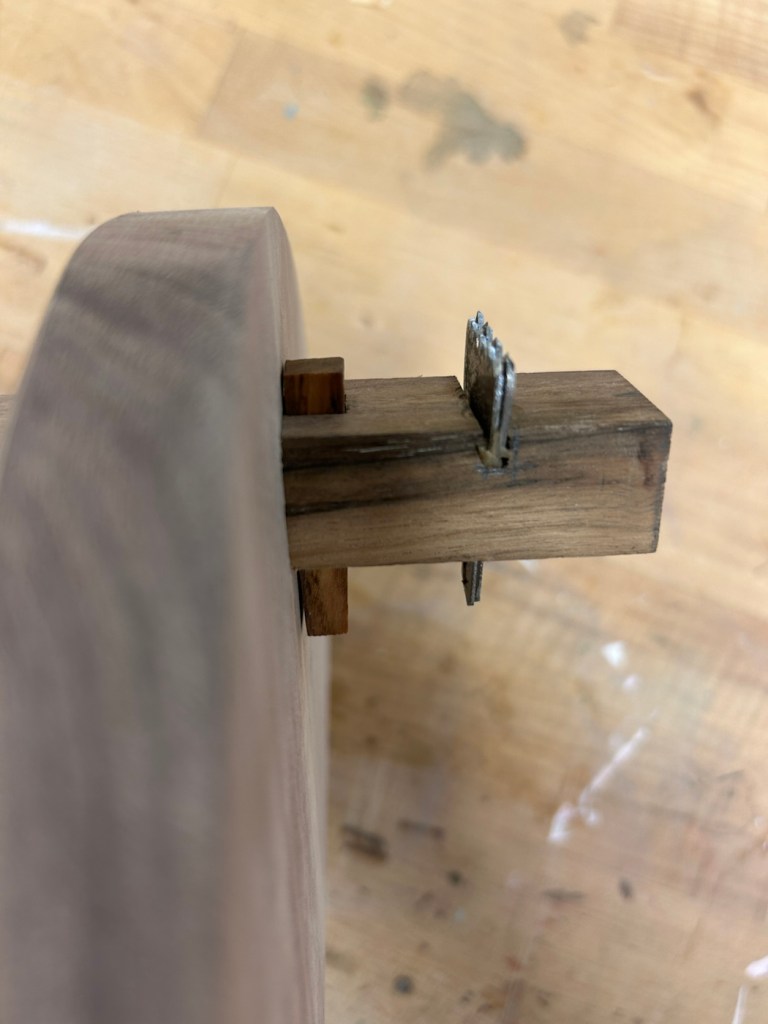
As mentioned in my previous post, the Romans used a post pillar construction for their croze. One detail in the surviving illustration has always made me wonder: it appears to show the croze being used with two hands. But if both hands are on the tool, who is holding the bucket?
Through building and using my V1 and now V2 post pillar crozes, I’ve found that the tool can be operated one-handed.
A traditional croze is worked around the inside of the vessel, with the cooper guiding the blade while following the circumference of the staves. It is a tool that requires a good deal of skill and experience. I’m still very much an apprentice, so the post pillar design makes more sense for me.
The post pillar croze uses a mounted fence that rests on the top of the staves. As I push the cutter around the inside of the bucket, the fence follows the curve of the vessel, helping maintain a consistent depth. Mine is set between ¼ and ½ inch, depending on the vessel.
From V1 to V2
V2 brought several improvements:
- A tighter mortise-and-tenon joint holds the post and fence without needing a wedge.
- A straight mortise holds the blades securely and prevents them from falling out.
One of my biggest lessons came from experimenting with the blade spacing. I originally thought a wedge between the two blades would create a wider croze. I was wrong. Instead, I created two separate grooves and had to chisel out the material between them—a slow and frustrating process. The vibration also caused the blades to work loose.
For V2, the two blades are pressed tightly together and held firmly in a shallow, tight mortise. The result has been a much more secure tool and, during testing, a clean and continuous croze all the way around the bucket.
For an apprentice like me, the post pillar croze offers something valuable: repeatability and control while I continue developing the skills needed to eventually work with more traditional tools.
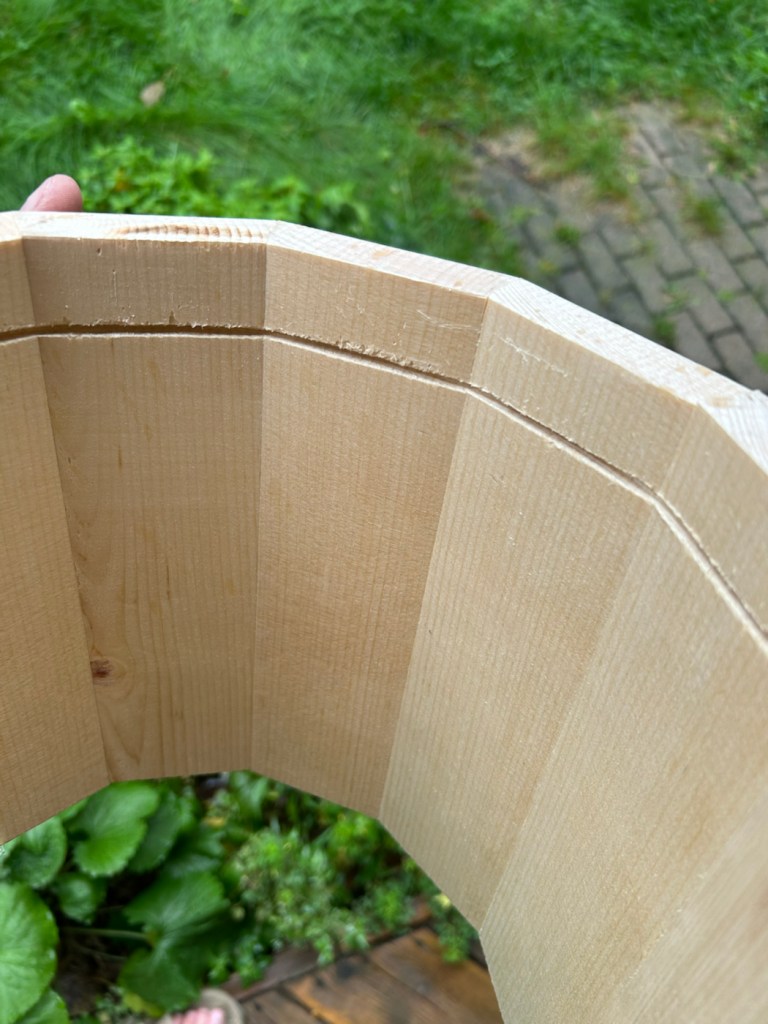
The next improvements in the process will be perfecting the head shaping to fit into the croze. Additionally, I really need to find metal temporary hoops to hold staves tightly in place to prevent shifting while cutting the croze.
There is still plenty to learn, and that is part of the appeal of this craft. Each vessel—and each mistake—teaches me something new. The goal isn’t simply to make a bucket, but to better understand the tools, techniques, and decisions that made these vessels possible centuries ago. One stave, one tool, and one lesson at a time.
 By Stave & Hoop