Buckets in the Wild – Pirate Festival Reflections
Every year, I take part in the annual Pirate Festival in Guelph, Ontario, where I sell wooden and metal tankards.
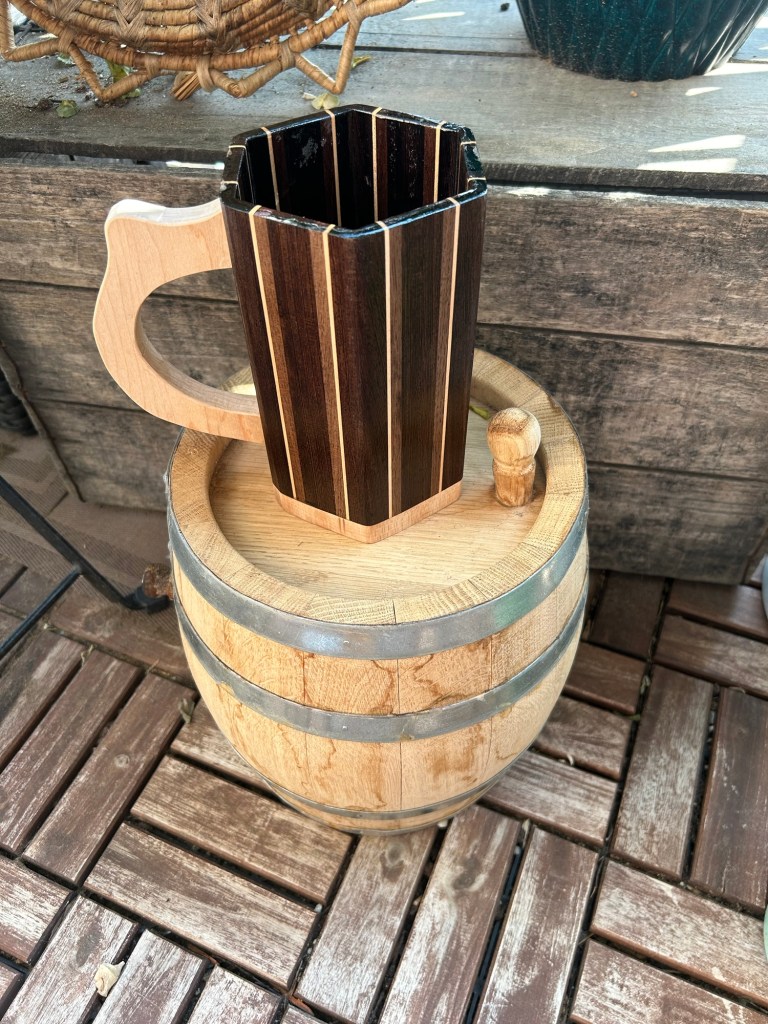
This year, I was especially excited to bring along some of the fruits of my labour… buckets.
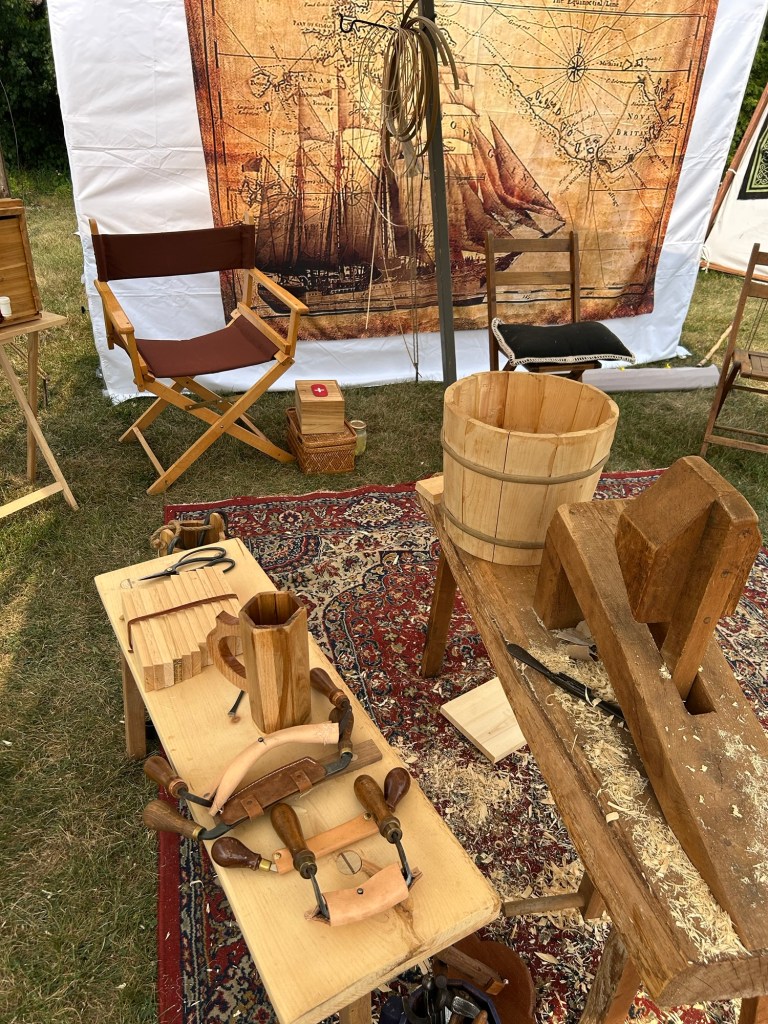
Alongside my wares, I set up my shave horse and a partially completed bucket so I could work while talking to visitors about the history of coopering—from the Viking Age through to the Golden Age of Piracy.
A Bucket as a Conversation Starter
The bucket I brought was made from twelve staves, glued together with two temporary wooden hoops. It was enough of a recognizable shape to spark curiosity—and that’s exactly what it did.
When speaking with children, I’ve found the best approach is simple: show them the object, then ask what they think it is—and what might be missing.
From there, the conversation builds naturally. I explain how the bottom (the “head”) is made and how it will eventually be pushed into place… and pop!—locking everything together.
The questions that followed were fantastic:
Where does the wood come from? Why use twelve staves? How do the tools work? Will you finish it today?
A Perfect Interaction
My favourite moment of the weekend came from a young girl—maybe six years old—who walked into the tent with complete confidence and asked:
“What are you making?”
I replied, “Do you want the short version or the long version?”
She paused, looked around at the tools, the wood shavings, the shave horse… then back at me.
“Short,” she said.
I told her, “I use all of this to make wooden buckets.”
She nodded thoughtfully, thanked me for my time, and wandered off.
Perfect.
Unexpected Interest
I was also pleasantly surprised by the level of interest from teenagers and post-secondary students. Many wanted to go deeper—asking about origins, from prehistoric containers through the Viking Age, into the 1800s, and eventually the Industrial Revolution.
A Hard Lesson Learned
Image: Working the head into the bucket
It took me the entire weekend to get the bucket head seated into the croze.
Having already made a few buckets by hand, I couldn’t understand why this one was fighting me so much—until it finally clicked.
I had glued the staves together and added temporary hoops ahead of time so the bucket would look more complete for demonstrations.
That decision made the structure too rigid.
Instead of flexing slightly to allow the head to slide into place, the bucket resisted completely. To compensate, I had to remove far more material from the inside staves than expected just to get the head to fit.
The Payoff
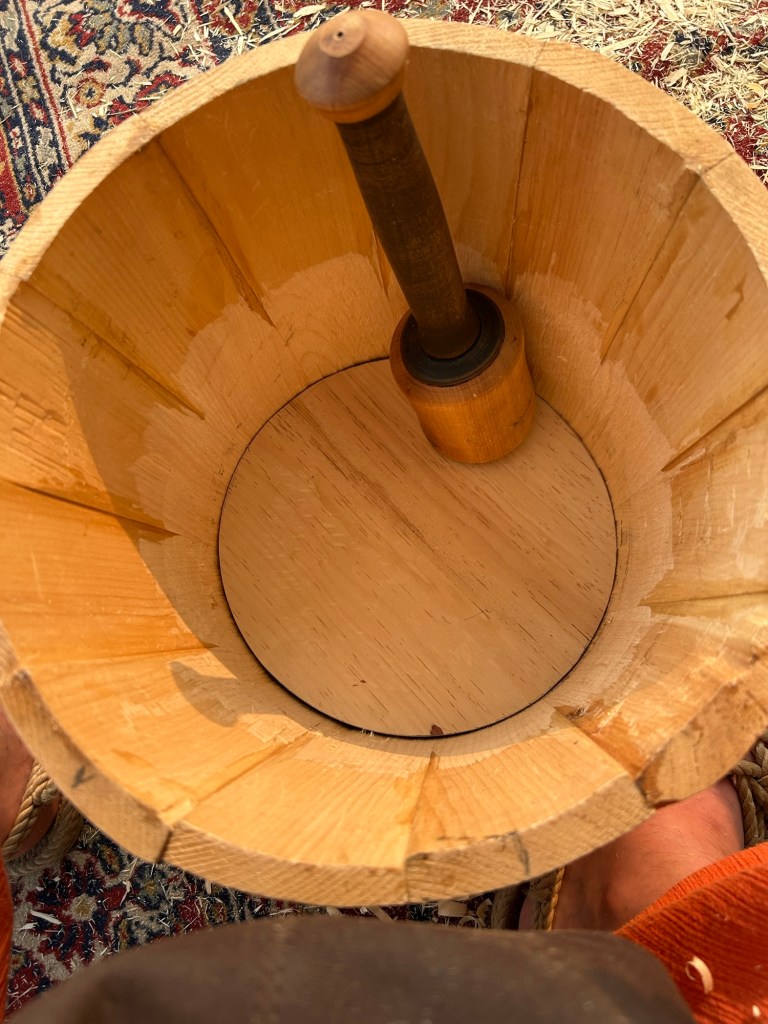
In the end, I did manage to get the head in—and was rewarded with that deeply satisfying pop as it locked into place.
It won’t be a watertight bucket, but that’s alright. The lessons learned here are far more valuable, and they’ll carry directly into the next build.
Since then, I’ve commissioned a blacksmith to create proper metal set hoops. These will not only improve the build process but also make for better, more accurate demonstrations in the future.
Hoop Terminology in Coopering
Traditionally, coopers used a sequence of hoops during construction:
Set Hoop (or Runner) The first hoop applied—used to bring the initial staves together. While historical naming isn’t well documented, “set hoop” is a commonly used modern term. This hoop is often temporary. Chime (or Head Hoop) Placed near the base after the head is fitted securely into the croze. Top Hoop Added near the rim to stabilize and level the structure.
Archaeological finds from the Viking Age show buckets constructed with anywhere from three to six or more hoops, depending on their purpose and construction style.
Final Thoughts
This weekend reinforced something I keep learning over and over:
Every bucket teaches you something.
Sometimes it’s about tools. Sometimes it’s about process. And sometimes, it’s about what not to do next time.

